
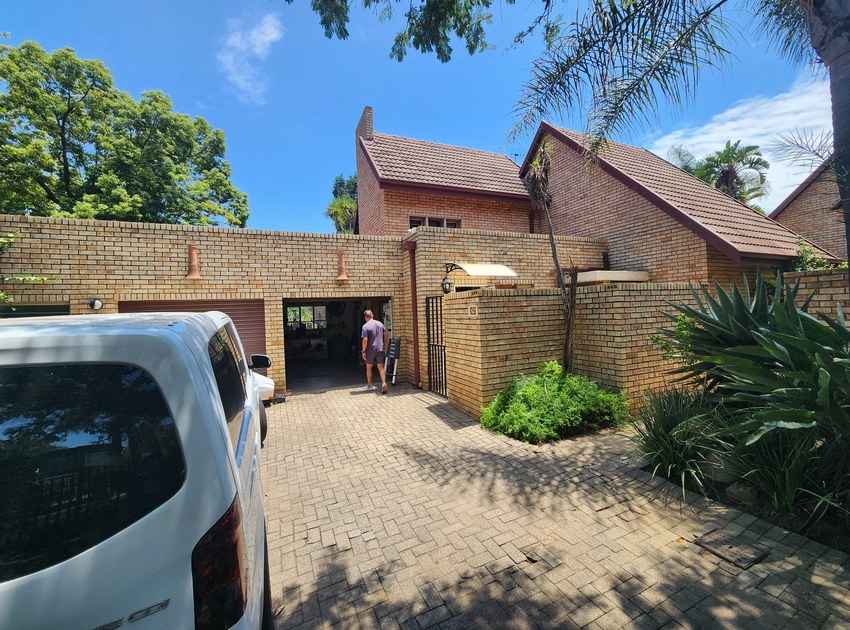
Walk any street in Greenside, Melville or Parkhurst and you will see them: parapet walls framing the roofline of a 1930s or 1940s home. They give these houses their character — and they are, by a distance, the most common reason the ceilings below them stain every summer.
Why parapets leak when the roof is fine
A parapet is a wall that rises past the roof surface, which means it has three exposed faces and a junction where it meets the roof — and every one of those is a water path. The wall top cracks, the paint chalks, and the junction between wall and roof opens with thermal movement. Rain enters the top of the wall, travels down inside the brickwork, and appears as damp patches on interior walls or ceiling edges metres away. The tiles or sheeting can be in perfect condition; the water never touched them.
Why patching fails
The standard bad fix is a brush of bitumen or silicone along the visible crack. It fails within a season because the crack is a movement joint — the building flexes daily with temperature, and a rigid smear simply cracks with it. The second bad fix is paint alone: exterior paint is not a waterproofing membrane, and on a horizontal wall top it fails even faster than on a wall face.
The system that holds
- Repair the substrate. Cracked plaster and mortar on the wall top is cut out and repaired, and the junction is cleaned back to sound material.
- Prime. A primer matched to the surface ties the membrane to old plaster and brick.
- Reinforced membrane over the detail. A liquid membrane with reinforcement mat is carried over the wall top, down the face, and across the junction onto the roof surface — one continuous, flexible layer that can move with the building.
- Flashings and box gutters at the same time. Parapet roofs almost always hide box gutters and flashings; sealing the wall while leaving a rusted gutter is half a job.
- UV-stable topcoat. The membrane gets a protective coat that handles sun and can match the house colour.
A recent example in Greenside
Our tile roof, ridge, parapet and flashing waterproofing project in Greenside shows the full sequence on exactly this kind of home — ridges, parapet tops and flashings treated as one system, photographed from start to finish. Similar detail work in Melville and Parkhurst followed the same method.
Own one of these homes?
If your Greenside, Melville or Parkhurst home stains at the wall lines after rain, the parapets are the first suspect. Prime Seal Spray is an approved SealPro applicator serving the greater Johannesburg North area — inspections are free and the advice is straight. Call 064 879 3553 or request a quote.

You must be logged in to post a comment.